Why Does My Cat Keep Begging for Wet Food After Eating?
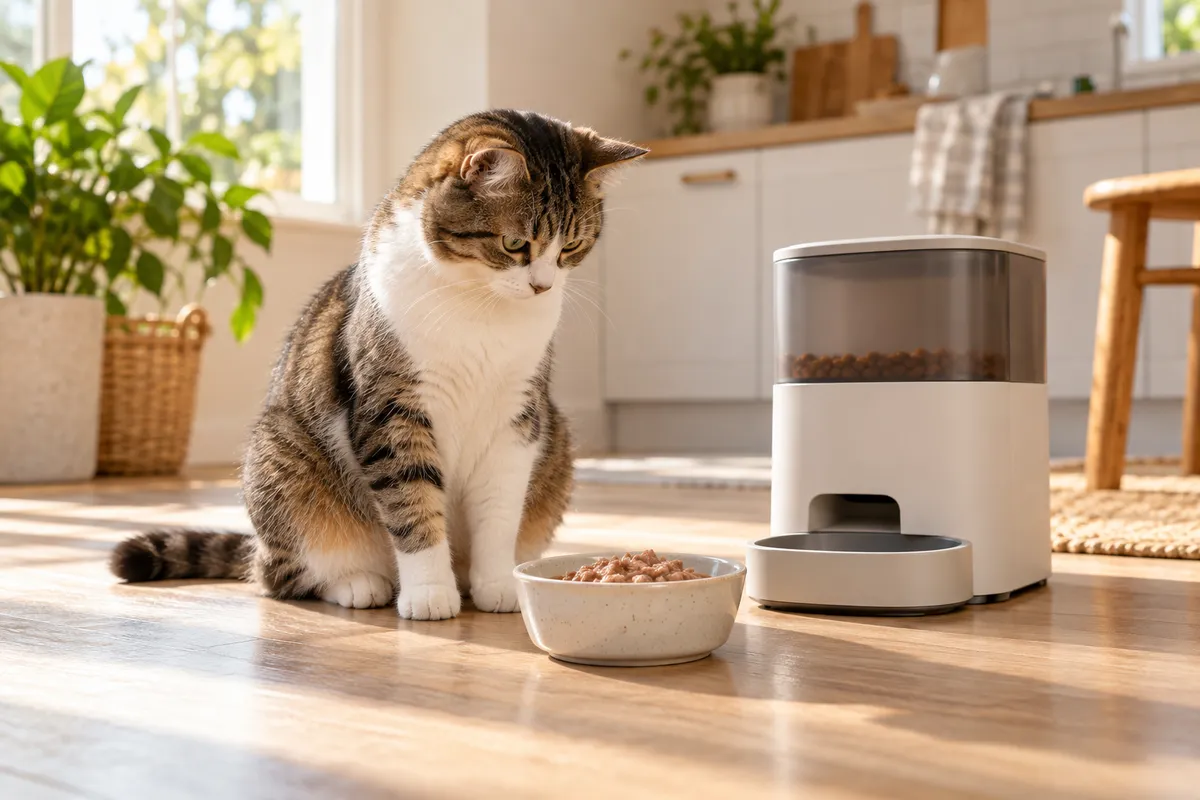
A cat that keeps begging for wet food after eating does not automatically need another serving. Food-seeking can be reinforced when it gets a response, but a change in appetite can also have medical causes. Look at the cat’s overall eating, weight, thirst, and urination—not the begging alone—and ask your veterinarian about persistent or unusual changes. Testing for Increased Appetite | VCA Animal Hospitals Feeding a Cat Who is a Glutton | VCA Animal Hospitals
Why might a cat keep asking for wet food?
Begging can become a learned routine
If a cat gets food after meowing or asking, the behavior may be reinforced. That does not prove the cat is hungry; it means the request and the response may become part of a routine. VCA recommends avoiding food as the response to begging and suggests alternatives such as play. Feeding a Cat Who is a Glutton | VCA Animal Hospitals
Food interest and feeding patterns may play a role
A cat may seek food for reasons other than needing another meal. VCA discusses food enjoyment, boredom, and free-feeding among possible factors in overeating. Feeding programs can also account for behaviors such as foraging and frequent small meals, with a plan tailored to the cat and household. Feeding a Cat Who is a Glutton | VCA Animal Hospitals Feline Feeding Programs: Addressing Behavioral Needs to Improve Feline Health and Wellbeing - catvets.com
The sources do not establish why a particular cat asks specifically for wet food. Taste, texture, routine, and other explanations are possibilities to discuss—not conclusions you can draw from begging alone.
A full dry-food bowl does not tell you what your cat needs
Seeing dry food in the bowl does not establish how much your cat has eaten or whether its overall diet and portions are appropriate. Likewise, asking for wet food does not tell you how many calories the cat has consumed. Track food and treats, and ask your veterinary team to assess your cat’s body condition and feeding plan. WSAVA provides nutrition resources, including body-condition tools, to support individualized assessment. Nutrition Guidelines - WSAVA
How to manage begging without adding unplanned meals
- Keep a food record. Note what your cat is offered and what it eats, including treats, so you can discuss the pattern with your veterinarian.
- Check the plan before changing portions. Ask your veterinary team whether the amount and type of food suit your cat’s needs. Avoid guessing at a calorie target or adding servings just because your cat asks.
- Make meals predictable. Portion-controlled meals and multiple smaller meals may be options to discuss for your household and cat. Feeding guidance should be individualized rather than treated as a universal schedule. Feeding a Cat Who is a Glutton | VCA Animal Hospitals Feline Feeding Programs: Addressing Behavioral Needs to Improve Feline Health and Wellbeing - catvets.com
- Try a non-food response to requests. Play or appropriate food-foraging options may help redirect food-seeking without making every request produce another meal. Feeding a Cat Who is a Glutton | VCA Animal Hospitals Feline Feeding Programs: Addressing Behavioral Needs to Improve Feline Health and Wellbeing - catvets.com
If your cat has a medical condition or its appetite has changed, check with your veterinarian before changing its feeding routine.
When should you call the veterinarian?
Contact your veterinarian if increased appetite is accompanied by weight loss, increased thirst, or more frequent urination. These signs are described with conditions such as hyperthyroidism and diabetes, but they do not diagnose either condition; diagnosis requires veterinary assessment. Hyperthyroidism in Cats | Cornell University College of Veterinary Medicine Feline Diabetes | Cornell University College of Veterinary Medicine
A veterinarian can evaluate increased appetite in context, including the cat’s history, other signs, and any tests they consider appropriate. If begging is new, persistent, or paired with other changes, share what you have observed and your food record. Testing for Increased Appetite | VCA Animal Hospitals
FAQs
Does a full bowl of dry food mean my cat is not hungry?
Not necessarily. A bowl’s contents do not show how much your cat has eaten or whether its overall feeding plan is appropriate. Track intake and ask your veterinarian to assess the plan.
Should I give more wet food when my cat begs?
Not automatically. Begging alone does not establish that your cat needs more food, and responding with food can reinforce the behavior. Check the feeding plan and consider non-food alternatives such as play. Feeding a Cat Who is a Glutton | VCA Animal Hospitals
Can smaller, more frequent meals help?
They may suit some cats and households, but there is no one schedule that fits every cat. Discuss portion-controlled meals and feeding options with your veterinary team. Feeding a Cat Who is a Glutton | VCA Animal Hospitals Feline Feeding Programs: Addressing Behavioral Needs to Improve Feline Health and Wellbeing - catvets.com
What other changes should I watch for?
Pay attention to weight loss, increased thirst, and increased urination alongside appetite changes. These signs warrant a veterinary conversation; they are not enough to identify a cause at home. Hyperthyroidism in Cats | Cornell University College of Veterinary Medicine Feline Diabetes | Cornell University College of Veterinary Medicine
Sources
- Testing for Increased Appetite | VCA Animal Hospitals
- Feeding a Cat Who is a Glutton | VCA Animal Hospitals
- Feline Feeding Programs: Addressing Behavioral Needs to Improve Feline Health and Wellbeing - catvets.com
- Nutrition Guidelines - WSAVA
- Hyperthyroidism in Cats | Cornell University College of Veterinary Medicine
- Feline Diabetes | Cornell University College of Veterinary Medicine