Smart Water Fountains vs Automatic Pet Feeders: Which One Do You Need?
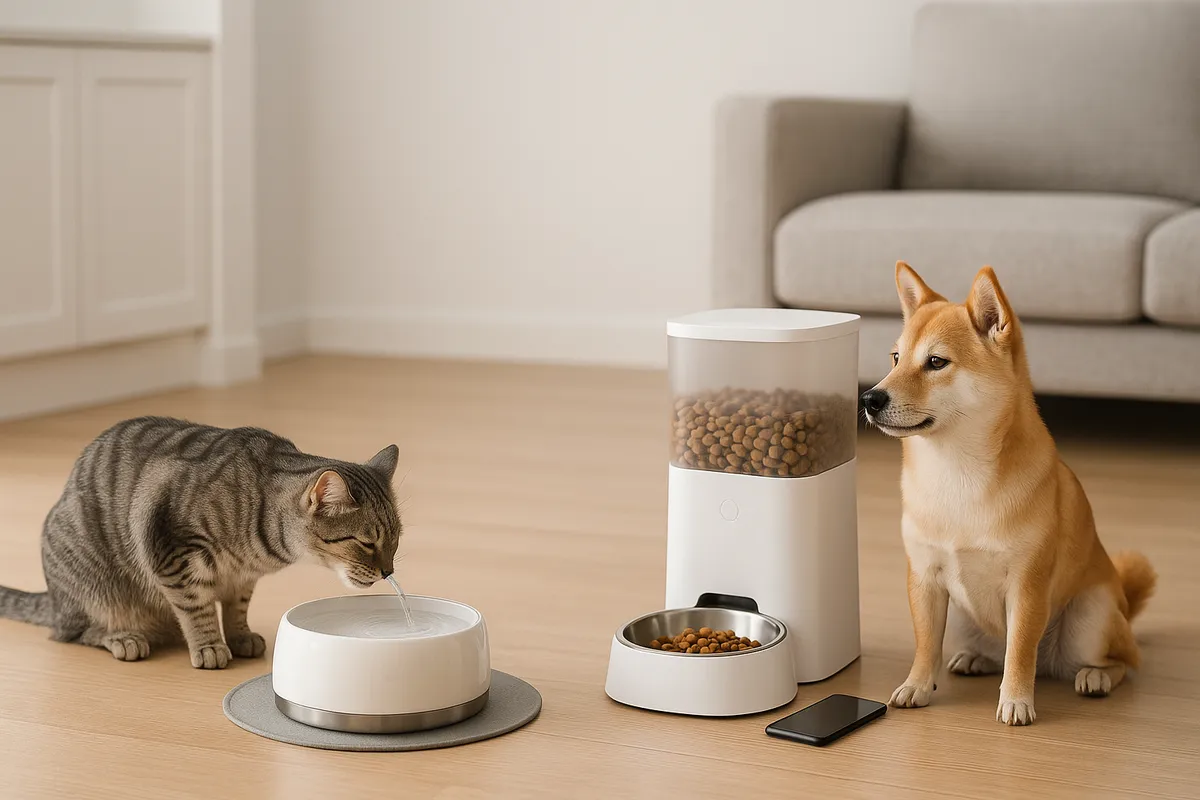
Smart Water Fountains vs Automatic Pet Feeders: Which One Do You Need?
Smart pet tech solves two everyday problems: keeping meals on time and keeping water fresh. If you live a busy, urban schedule, both matter. This guide compares smart water fountains with automatic pet feeders so you can decide what to buy first—and when it’s worth investing in both.
Bottom line upfront: If your pet free-feeds and rarely finishes bowls, start with a smart fountain to boost hydration and reduce biofilm. If you’re managing weight, special diets, or chaotic mornings, start with an automatic pet feeder to automate portions and schedules.
What Each Device Actually Solves
Smart Water Fountain (Hydration)
- Core goal: Encourage pets (especially cats) to drink more with circulating, filtered water.
- Problems solved: Stagnant water, bowl aversion, hair/dust in water, frequent bowl changes.
- Signs you need one: Pink or slimy bowl film, nose prints on standing water that your pet avoids, litter clumps darker than usual, vet urging better hydration.
Automatic Pet Feeder (Nutrition)
- Core goal: Deliver accurate portions at predictable times—even when you’re not home.
- Problems solved: Overfeeding, early-morning wake-up meows, inconsistent schedules, multi-pet food stealing (with microchip/RFID models), and weight control.
- Signs you need one: “Food begging” at dawn, pets that gain weight easily, a sitter who forgets portions, or strict medication/meal timing.
At-a-Glance Comparison
| Feature/Concern | Smart Water Fountain | Automatic Pet Feeder |
|---|---|---|
| Primary function | Hydration, cleaner water | Timed meals, portion control |
| Smart features | Flow speed, filter alerts, low-water sensors, app notifications | Schedules, portion sizing (grams/cups), app control, feeding logs, low-food alerts |
| Best for | Cats, small dogs, multi-pet hydration | Cats & dogs, weight control, rigid schedules |
| Noise sensitivity | Pump hum varies by model | Motor click/whirr at feed time |
| Daily effort | Refill; quick rinse | Refill hopper; check logs |
| Weekly effort | Full clean; filter change (per schedule) | Hopper/bowl wash; jam check |
| Ongoing costs | Filters, pump impellers | Desiccants, batteries (if used), optional liners/ice packs |
| Food safety | N/A (water only) | Dry kibble easiest; some support wet food with cooling/insulation |
| Multi-pet control | Encourages all to drink | Microchip/RFID feeders restrict access per pet |
| Travel peace of mind | Moderate (water supply) | High (meals handled on schedule) |
When a Smart Fountain Is the Better First Buy
- Your pet is under-hydrating. Cats are desert-adapted; many prefer moving water. Circulation reduces odor and keeps water appealing.
- You’re battling biofilm and debris. Filters catch fur/dust; flow discourages slime buildup.
- You already free-feed dry food. If food access is constant and weight is stable, hydration is the bigger win.
- You work late or travel short stints. A larger-capacity fountain with low-water alerts reduces emergency refills.
- You want fewer bowl chores. You’ll still clean weekly, but the day-to-day water stays fresher.
Fountain features to prioritize
- Quiet, low-vibration pump (spooked pets avoid noisy units).
- Dishwasher-safe parts (top rack) and ceramic or stainless where possible—more hygienic than porous plastics.
- Accessible filter replacements; look for affordable, widely available filter packs.
- Clear water path and easy disassembly for quick weekly scrubs.
- App or indicator alerts for low water and filter changes.
When an Automatic Pet Feeder Should Come First
- Portion control or weight management. Precision beats guesswork. Scheduled small meals curb “scarf and barf,” stabilize energy, and help with diets.
- Early-morning feeding drama. Set a pre-dawn dispense time; let the machine be the “bad cop.”
- Busy or irregular hours. Your pet’s routine stays consistent even when yours doesn’t.
- Multi-pet rivalry or theft. Microchip/RFID feeders open only for the assigned pet—great for prescription diets.
- Medication or timed feeding. Some health plans rely on reliable meal timing.
Tip: Use our Portion Calculator and Feeding Schedules by Age to map out exact meal sizes and times for your pet.
Safety & Hygiene: Non-negotiables
- Materials: Favor ceramic or stainless contact surfaces; avoid scratched plastics that harbor bacteria.
- Weekly deep clean: Disassemble, soak, and scrub—both fountains and feeders. Replace filters and desiccants on schedule.
- Power & placement: Keep cords protected from chewers; route fountain cords with drip loops.
- Allergies & special diets: Microchip feeders help isolate prescription food; label bowls and keep the area tidy.
- Wet food handling: Follow safe time windows; chilled trays are a must in warm climates.
Cost of Ownership (Realistic View)
- Smart fountain: Up-front device + recurring filters and occasional pump/impeller replacements.
- Automatic pet feeder: Up-front device + desiccants, optional batteries, and rare hopper/bowl replacements.
- Your time: Expect a 10–15-minute weekly cleaning block per device. Apps reduce mental load but don’t replace hygiene.
Decision Framework: Which Should You Buy First?
Use this quick scoring guide (0–2 points each):
- Hydration concern (dark litter clumps/dry nose/avoids bowl) → Fountain +2
- Weight control/portion precision needed → Feeder +2
- Early-morning wakeups → Feeder +2
- Hates standing water → Fountain +2
- Multi-pet food theft → Feeder (microchip) +2
- You free-feed without issues → Fountain +1
- You’re away at mealtimes → Feeder +2
Tally: Higher score indicates your best first purchase. If scores tie—or your pet is picky—plan to get both in this order: feeder for structure, fountain for hydration.
Setups That Work in Real Homes
Single cat, stable weight, picky about water
- Start with a quiet ceramic fountain; place away from litter and food.
- Add feeder later if mornings are chaotic or you need sitter-proofing.
Two cats, one on prescription food
- Microchip automatic feeder for the diet pet.
- Shared smart fountain in a neutral spot to reduce resource guarding.
Small dog, alone during work hours
- Automatic feeder with battery backup and app logs.
- Fountain optional; choose a low-splash model to avoid wet snouts.
Kitten or senior cat
- Feeder for small, frequent meals; fountain to encourage gentle sipping.
- Elevate bowls slightly for seniors with stiffness.
Maintenance Routines You’ll Actually Keep
Daily (30–60 seconds)
- Fountain: Quick top-off and visual check for fur/debris.
- Feeder: Confirm last dispense in the app; glance at hopper level.
Weekly (10–15 minutes)
- Fountain: Full disassembly, scrub path and pump, replace/flush filter.
- Feeder: Wash bowl and chute guard; wipe hopper rim; re-calibrate portions monthly.
Monthly/Quarterly
- Replace fountain filters/impellers as recommended.
- Replace feeder desiccants; inspect batteries; verify schedules after app updates or power cuts.
Common Mistakes (and Easy Fixes)
- Placing water beside food. Many cats prefer water away from the food area. Move the fountain a few feet.
- Ignoring pump noise. Rattling often means low water or trapped air; refill and burp the pump.
- Assuming any kibble will work. Oversized or oily kibble can jam dispensers. Test and adjust portion size/kibble type.
- Letting plastic scratch up. Replace worn bowls to prevent bacterial harbors.
- No battery backup. For feeders, a brief outage can skip a meal—install batteries even if you’re on mains power.
The Case for Owning Both
They solve different problems. A fountain supports long-term urinary and kidney health by nudging steady drinking. An automatic pet feeder reduces stress—for you and your pet—by anchoring reliable meal times and accurate portions. Together, they create a calmer routine and fewer “emergencies.”
Recommended Shopping Checklist
For Smart Water Fountains
- Quiet pump (≤ 30–35 dB if listed)
- Ceramic/stainless top surfaces; dishwasher-safe parts
- Filter availability and cost per month
- Easy disassembly; visible water path
- Low-water sensor and/or app notification
For Automatic Pet Feeders
- Portion accuracy with cup/gram settings and test mode
- Jam-resistant path for your kibble size; secure lid
- App control with logs, low-food alert, and battery backup
- For multi-pet homes: microchip/RFID access control
- For wet food: insulated/chilled trays and tight time windows
FAQ
Do I need both a fountain and a feeder?
If you’re balancing convenience with health outcomes, yes—feeder for structure and fountain for hydration.
Are automatic pet feeders good for wet food?
Only certain models. Use ice packs or refrigeration, respect food safety time limits, and clean more frequently.
How loud are these devices?
Quality fountains are a soft hum when full. Feeders make a short motor sound at dispense time.
What about power outages?
Choose feeders with battery backup and fountains that can safely run low without burning the pump (or switch off when unattended for long trips).
How do I choose portion sizes?
Start with your vet’s guidance, then fine-tune using our Portion Calculator and monitor weight weekly.
Final Recommendation
- If your pet’s hydration is questionable or you notice bowl aversion, buy the smart fountain first.
- If you need consistency, portion control, or theft prevention, buy the automatic pet feeder first.
- For most urban households, owning both is the long-term, low-stress solution: meals are automatic, water stays fresh, and your routine gets simpler.
Plan your setup today: map meals with the Portion Calculator and align times with Feeding Schedules by Age.