Guide – How to choose the right automatic feeder based on pet type, capacity and features
Introduction
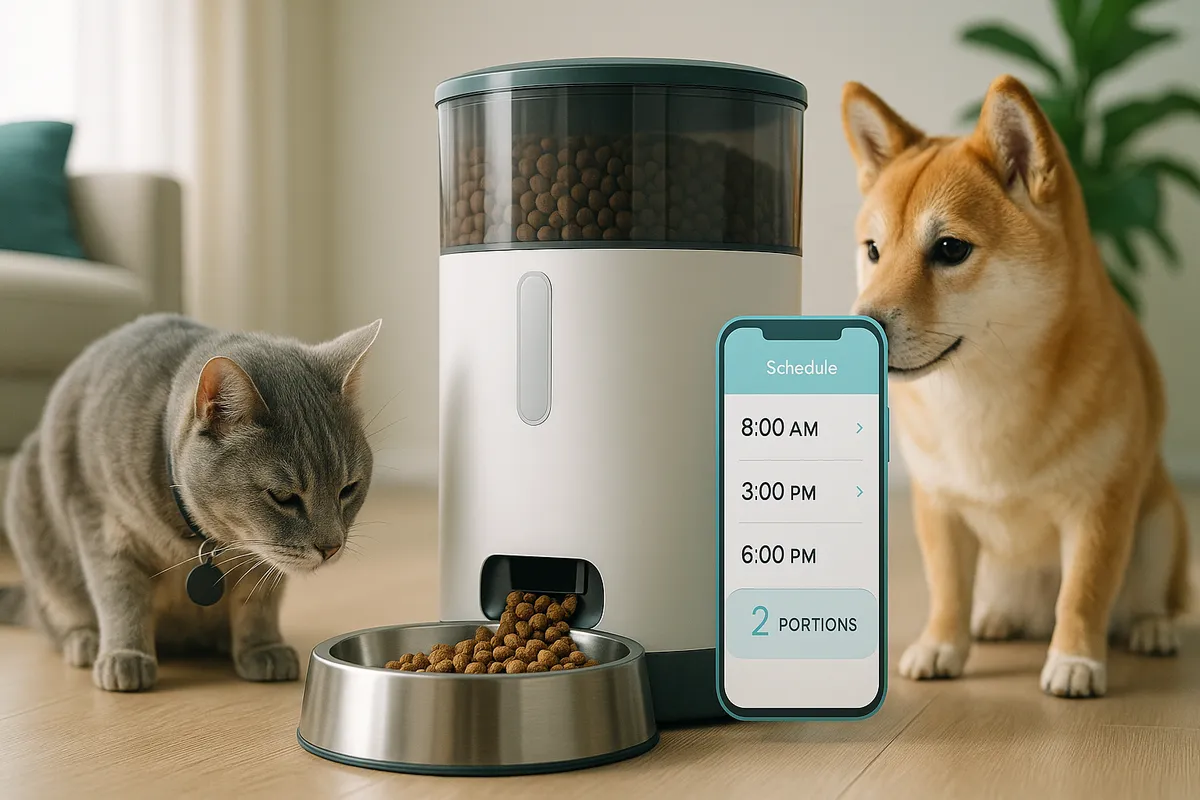
Life in a fast‑paced city often leaves pet owners torn between professional obligations and caring for animals. Automatic feeders promise to help by delivering meals at set times and controlling portions, freeing you from measuring kibble or being home at dinner time. They can be as simple as mechanical trays or as sophisticated as Wi‑Fi‑connected devices that send notifications and video streams to your phone. Selecting the right feeder requires considering your pet’s behaviour, the food type, and the level of automation you need. This guide combines veterinary advice and product reviews to help busy urban professionals make an informed choice.
Know your pet and household
Cats and dogs don’t eat the same way. Cats enjoy grazing and can become overweight when food is always available; in 2021 nearly 60 % of cats were overweight or obese. Vets therefore suggest feeding them two or three measured meals per day instead of free access. Wet food is less calorie dense than dry kibble. Dogs, on the other hand, inhale their meals. Good Housekeeping warns that gravity feeders encourage dogs to gobble food and overeat. Slow‑feed modes that dispense kibble over about 15 minutes help reduce gulping. In homes with multiple pets or animals on prescription diets, microchip feeders recognise an individual pet’s ID and only open for that animal. The SureFeed microchip feeder prevents theft and ensures medication or special food reaches the right pet.
Capacity and portion control
No single feeder suits every pet. Hopper capacity and portion control determine how long you can leave an animal unattended and how accurately you manage their diet. Some devices hold just a few cups; others, like the Petlibro feeder, store about 21 cups and dispense portions from 1/12 cup up to 4 cups, allowing as many as ten meals per day. Budget feeders such as the battery‑powered PetSafe model hold about five cups and deliver up to five meals. Choose a capacity matching your pet’s appetite and how long you’ll be away. Avoid gravity feeders because they continuously refill the bowl and encourage overeating. Electronic feeders dispense measured amounts, and some incorporate a scale to weigh each portion accurately.
Scheduling and programming
Scheduling options range from simple to sophisticated. Basic units rely on mechanical dials or simple digital buttons; some include an LCD screen and a voice recorder so you can leave a greeting. Smart feeders connect to home Wi‑Fi and an app, allowing you to adjust schedules, view a camera feed and talk to your pet. These devices may provide notifications when the hopper is low. Feeding wet food automatically is harder; dedicated feeders like the Polar model keep meals fresh for up to three days, while cordless designs use ice packs and rechargeable batteries. Decide whether you need remote control or if a simple timer is sufficient.
Power and reliability
Power source affects convenience. A battery‑powered feeder like PetSafe’s budget model costs under US$60 and can be placed anywhere. Plug‑in units provide continuous power but require an outlet. Many premium feeders combine both; the Petlibro plugs into the mains and accepts backup batteries, while the PetSafe Smart Feed uses an AC adapter and backup batteries and works with Amazon Alexa. Reliability features such as Smart Jam Fix™ technology to prevent clogs and low‑food detection sensors help ensure your pet never misses a meal.
Materials and hygiene
Hygiene and durability are critical because feeders handle food daily. Stainless steel bowls are robust, easy to clean and resist bacterial growth; the Pawsync feeder pairs a 304 stainless steel bowl with a BPA‑free reservoir. Many feeders feature sealed lids and moisture control systems to keep kibble dry; Pawsync includes a desiccant pack, and the SureFeed microchip feeder uses sealed bowls to keep food free of flies. Removable bowls and mats simplify cleaning. For wet food, choose models with ice packs or refrigeration and clean every compartment after use to prevent spoilage and odours.
Advanced features
Premium feeders include features that go beyond scheduling. Microchip or RFID feeders open only for the designated pet. Cameras with two‑way audio let you watch your pet and reassure them. Voice assistant integration adds convenience; the PetSafe Smart Feed works with Amazon Alexa so you can dispense a snack using voice commands. When evaluating extra features, think about what you will actually use and prioritise reliability over gimmicks.
Safety and behaviour
A feeder should support healthy habits. Gravity feeders offer unlimited access and encourage overeating, whereas electronic models dispense measured meals. For fast eaters, a slow‑feed mode spreads a meal over several minutes. Introduce new feeders gradually by placing them near your pet’s bowl and using the manual feed button during supervised sessions until they are comfortable.
Types of feeders
Automatic feeders fall into several categories. Mechanical feeders use simple timers or rotating trays; Cat Mate units accept any food type and prevent pets from accessing meals too early. Microchip feeders open only for authorised pets and often have sealed bowls and removable parts for easy cleaning. Smart feeders connect to smartphone apps and may include cameras and voice messages. Wet food feeders use sealed compartments and ice packs to keep meals fresh for a few days.
Budget and conclusion
Automatic feeders range in price from about US$30 for basic models to several hundred dollars for smart devices with cameras and microchip readers. Battery‑powered units like PetSafe’s budget model cost under $60 and offer five meals, but they lack app control and sensors. Higher‑end feeders with Wi‑Fi, backup power and notifications cost more but may be worth it if you travel frequently. Some premium systems even integrate a smart scale and meal tracking software that weighs each meal to the gram, monitors consumption over time, and adjusts portion sizes dynamically to reduce waste and promote healthy weight. They send real‑time notifications when your pet eats, giving peace of mind and allowing you to spot changes in appetite quickly. When choosing, decide which features are essential and which you can live without. The right feeder will provide measured portions and scheduled meals to prevent overeating, use durable materials that are easy to clean, and offer options like microchip recognition or slow‑feed modes for multi‑pet homes or fast eaters. Matching capacity and features to your pet and your routine ensures they stay nourished even when your schedule keeps you away. With the right feeder, you can maintain your pet’s diet effortlessly, ensure they are happy and healthy, and enjoy peace of mind during your busy day. That way, every meal is as reliable as your love for them.